
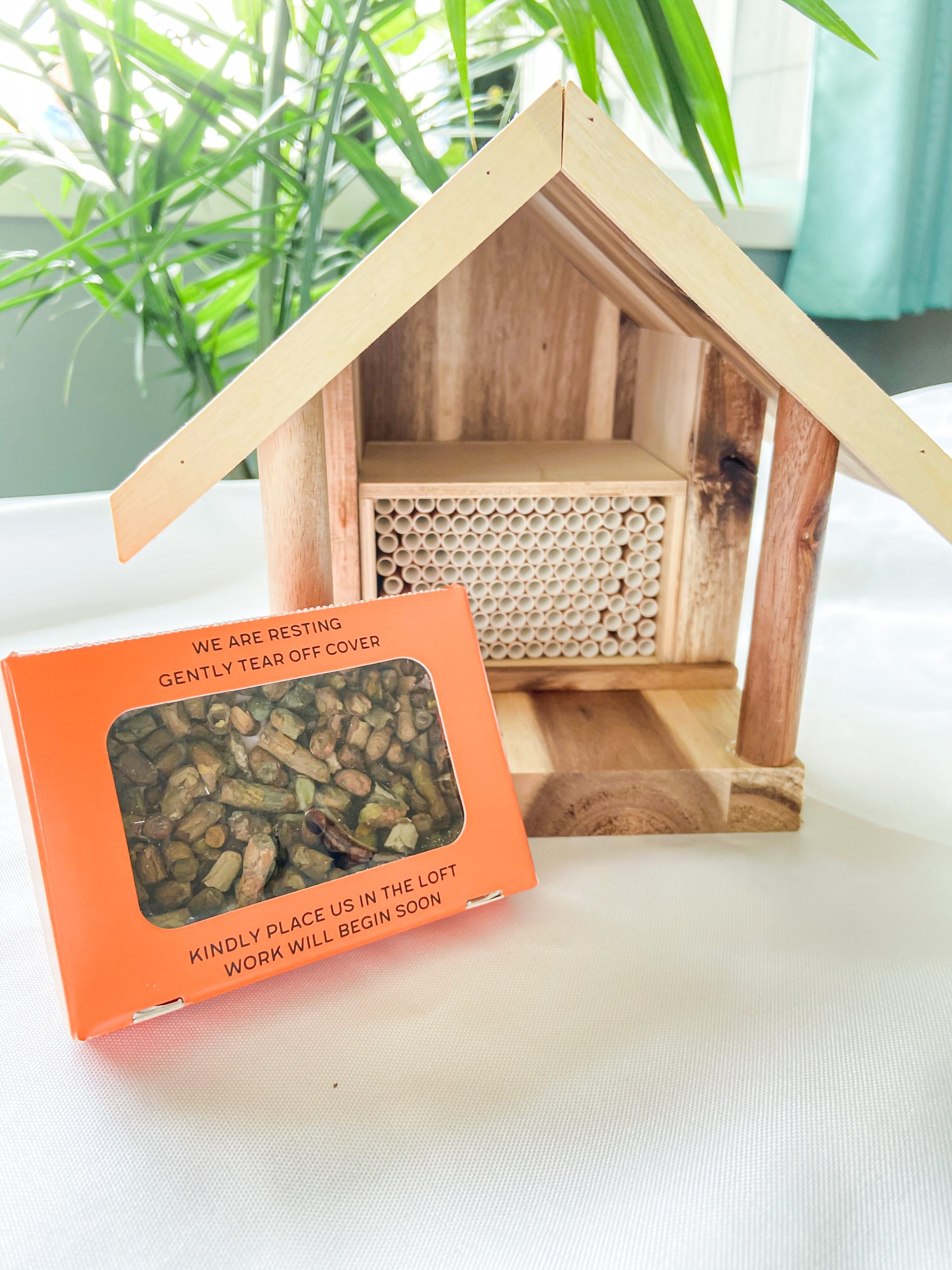
Gardening is a great way to help increase pollination rates in your local community! There are a few ways you can tweak your gardening plans in 2026 to encourage bees, birds, and other pollinators to go to work, from planting diverse species to installing a pollinator house kit.
Keep reading to learn more about how to increase the pollinator population in your garden, and how you can get your very own Bee Starter Kit from Kind Bee Farms!
Choose Plants that Pollinators Love
Pollinators are mainly drawn to flowering plants, fruits, and vegetables, as these are their main sources for gathering pollen.
The right plants and flowers will draw pollinators to your garden. By distributing them throughout different areas of your plot, you will give your other plants a better chance of being visited by bees, birds, and butterflies.
Different species will be drawn to different types of plants. For example, leafcutter bees are low-flying pollinators and may not be quick to visit tall plants if they do not have low-growing varieties to reach first.
Add low-growing plants like pansies, blueberries, chamomile, hostas, and more throughout your garden to encourage these busy bees to work in as many areas as possible. With proper distribution, you may just spot a leafcutter in your sunflower patch!
Practice Plant Diversity
Remember: All pollinators have different active periods.
Birds, butterflies, and honey bees typically emerge once the weather begins to warm up in the spring, while leafcutter bees are most active during the warmest part of summer.
Choose a variety of plants that will bloom at different times throughout the growing season to keep your pollinators fed and happy until the harvest!
Avoid Harmful Pesticides & Sprays
While pesticides can certainly deter unwanted critters in the garden, they can also be very harmful or even fatal to our hardworking bees and butterflies.
To maintain a more pollinator-friendly habitat, non-toxic pest removal methods, such as hand killing or using certain pest control oils, are effective alternatives.
Note: Do a lot of research before buying pest control oils. While some varieties can be harmless to leafcutter bees and other pollinators, others can be fatal.
Install a Pollinator House Kit
One of the best ways to encourage more pollinators in your garden is to bring them directly to your door! You can order your very own set of leafcutter bees from Kind Bee Farms and release them into your garden.
These flying friends are known as “superpollinators” due to their 1:20 pollination ratio compared to honeybees. These docile, solitary bees are gentle and easy to work around (that’s why we call them ‘kind’ bees) and very easy to look after.
Our Pollinator House Kit comes equipped with an acacia wood bee house and a set of bee nesting tubes. Your leafcutter bees will use this retreat to lay their nests and wrap their baby bees in cocoons so that you have a full set of bees for the following growth season.
How to mount the pollinator house from Kind Bee Farms:
- Find a spot within 300 feet of your plants and flowers, and use a sturdy mount to prevent it from being knocked over or accessed by house pets. You can find some fun and practical house mount ideas in this blog!
- Mount your bee house 4 feet above the ground (or waist height), so your low-flying bees can reach their home easily! This distance is also ideal for preventing moisture and ground critters from infiltrating your bees’ retreat.
- If possible, install your bee house in an east-facing area of your garden so that your bees get plenty of morning sunlight (leafcutter bees love the sun!)
- Avoid placing your bee house close to your hose or sprinkler system. Our bee house is designed to protect your kind bees from the rain, but it is important to avoid any unnecessary moisture.
…And that’s it! By following these easy steps, you can enjoy watching these busy superpollinators go to work in your garden.
Create Your Pollinator Garden with Kind Bee Farms
If you want to start a pollinator garden in 2026, partner with Kind Bee Farms and get your very own pollinator house kit! Visit our Shop to pre-order your bees, and check out our Blog for more facts about these powerful superpollinators.