
In the last edition of Kind Bee Building Blocks, we talked about what pollination really is and how it benefits us and nature. One of the biggest benefits of pollination is that it helps grow healthy, essential foods like fruits and vegetables for people around the world. Without pollinators, we wouldn’t have very much to munch!
Below, we will discuss the specific role that pollinators play in food sustainability, and how you can contribute to this essential resource with a Bee House from Kind Bee Farms!
How Is Food Affected by Pollination?
Our food is grown with a combination of plant, insect, and animal pollination to produce delicious, healthy, and abundant crops.
Several vegetables, like potatoes, peppers, and beans, have ‘perfect’ flowers that contain both the anther and the stigma. This allows the plants to self-pollinate through gravity-driven events, such as wind dispersal or animals brushing against them.
Vegetable crops that do not have visible flowers can be pollinated by a powerful force: the wind! These crops send up pollen spikes to catch the wind with stigmas that collect the pollen. This includes crops like corn, wheat, and other grasses.
However, the vast majority of our food, approximately 75%, relies on insect and animal pollination.
Bees, birds, butterflies, and other pollinators do not just spread pollen over flower patches; they are a major helper for vegetables, fruits, nuts, seeds, and feed crops!
So, how do insects and animals pollinate food crops?
Many essential foods like strawberries, squash, and beans ‘flower’ before they start to grow full size. Pollinators visit these flowers and inadvertently nourish them by transferring pollen from the anther to the stigma. Within a few weeks, they grow into full-sized fruits and vegetables!
Why Do Bees Matter in Food Production?
While there are many types of pollinating animals and insects, bees are often the most effective and crucial pollinating species.
Unlike other pollinators, which have a variety of purposes in our ecosystem, bees spend most of their life collecting and distributing pollen.
Fun fact: Bees are responsible for a third of the food we eat, worldwide.
Not only do bees pollinate crops, but their work to keep plants healthy also helps protect the soil quality where our food grows, preventing soil degradation. No wonder everyone is worried about declining bee populations!
What You Can Do
Bees are vitally important to our food supply, but due to environmental changes, disease, and harmful agricultural practices, bee populations are declining all around the world.
But don’t worry! There is plenty that we can do to support our native and non-native pollinators and keep food production going strong.
Whether you manage a commercial farming operation or keep a fruit and vegetable garden for your family, here are just a couple of things you can do to make a difference:
Plant for pollinators. One of the best ways to keep pollinators around is to give them plenty to snack on! Some fruits and vegetables with visible flowers include:
- Strawberries
- Blueberries
- Tomatoes
- Squash
- Beans
- Peas
- Peppers
Tip: Leafcutter bees are drawn to low-growing fruit and vegetables, so make sure to include a variety for them to locate and pollinate!
Introduce more pollinators into your environment. If you want to boost food growth in your area (or even just in your garden), introducing a set of leafcutter bees to your yard is a great way to contribute!
Leafcutter bees are native to Europe and were brought to Canada in the 1930s to help pollinate alfalfa crops. These bees are known as “superpollinators” due to their fast flying abilities and 1:20 pollinating ratio compared to honey bees.
We refer to leafcutters as “kind bees” due to their gentle, docile nature, which makes them excellent gardening companions!
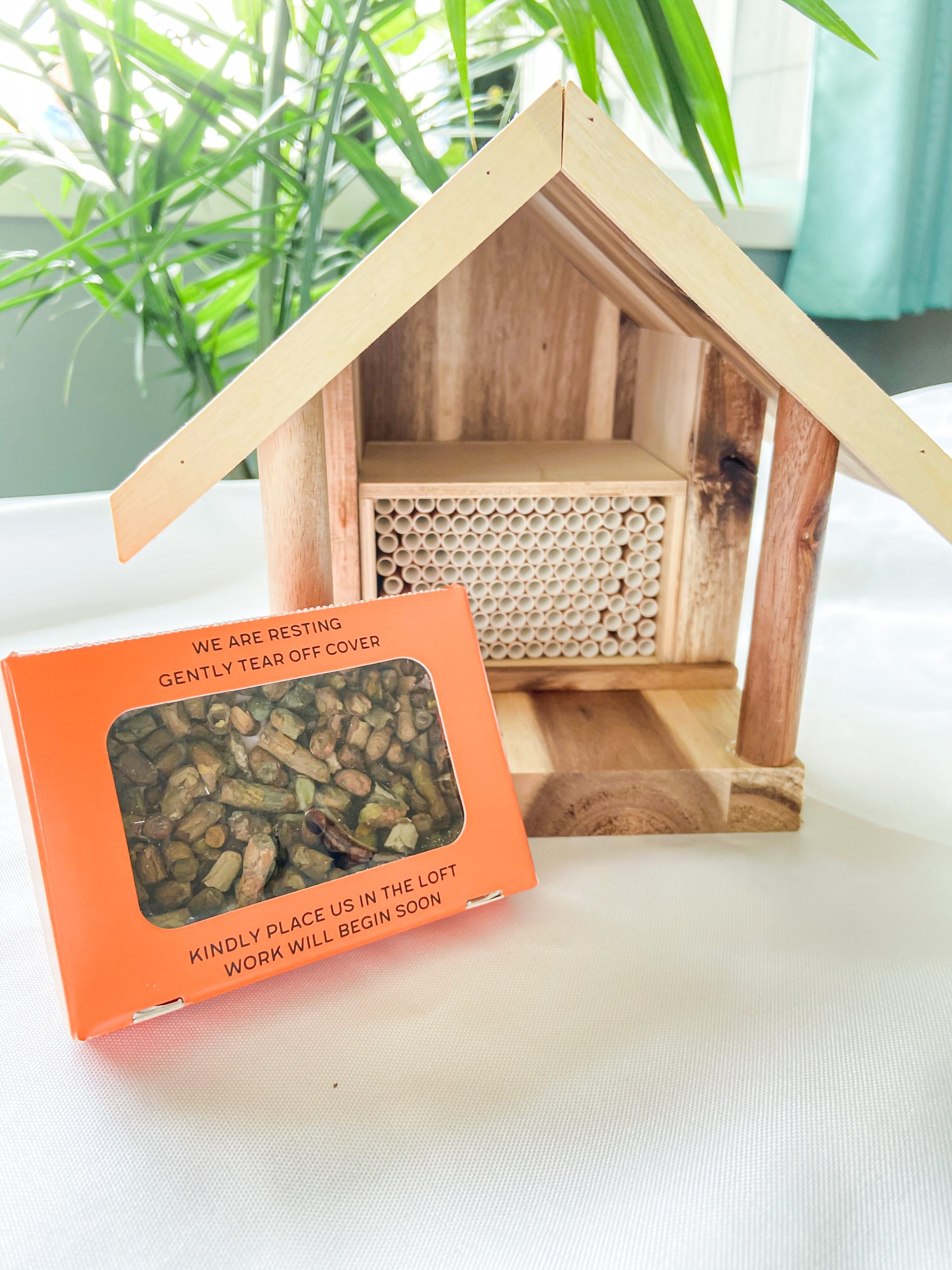
The Bee Starter Kit from Kind Bee Farms has everything you need: a box of 200+ bees, paper nesting tubes, and a sturdy acacia wood Bee House for your kind bees to build leaf cutter bee cocoons. You can find the full kit in our Shop!
Embrace Food Growth with Kind Bee Farms
Pollination is a vital part of our food system, and with the help of leafcutter bees from Kind Bee Farms, you can watch your fruit and vegetable gardens blossom this summer!
Visit our Shop to order your very own Bee Starter Kit, and check out our Blog for more information about these amazing super pollinators.