
When many people think of how bees work and live, their first thought is usually the routine of honeybees: collecting pollen, drinking nectar, making honey, and working with a hive. However, most bee species that fly in and out of our gardens every day in North America have a very different, solitary lifestyle. In fact, our leaf cutter bees from Kind Bee Farms are one of the most well-known solitary bee varieties!
So, how do solitary bees’ work and life differ from social bees? Keep reading to learn more about these types of bees, including how the work of leafcutter bees can help grow your plants and crops!
The Life of a Solitary Bee
Solitary bees are a type of bee species that work and nest alone; these bees are independent, self-employed pollinators! While many people’s default bees are honey or bumblebees, only about 10% of bees globally are social, while over 20,000 bee species are solitary. So, how do these bees work and live?
Leafcutter bees, mason bees, carpenter bees, and other solitary varieties live in small, secluded nests. The male bees’ main purpose is to breed, so they have shorter lifespans (varieties like male leafcutter bees only live for 10-14 days), while the females are left alone to nest with their eggs. In nature, they will usually nest in small tree holes or plant stems, while some species nest in the ground.
Solitary bees don’t just live alone; they also work independently. Female bees build nests, lay eggs, collect pollen and nectar, and pollinate flowers without any assistance from other bees, unlike social bees, who work in colonies.
Types of Solitary Bees
In North America, there are about 4,000 native bee species (about 800 in Canada), and the vast majority are solitary bees. Some of the more common bees you will come across in nature include mason bees, carpenter bees, and leafcutter bees. Here are some fun facts about these solitary bees and how they differ from each other:
Mason Bees
Mason bees are cavity-nesting solitary pollinators that show up in gardens during the springtime. These bees use dirt and mud to build their nests and cover the tunnels. They are members of the megachilidae family, so they carry pollen on their bellies, unlike honey bees, who carry pollen on their legs.
Carpenter Bees
Carpenter bees are another type of solitary bee that chew through wood to make their nests and lay eggs. These bees are easily confused with bumblebees, but they are fully black rather than black-and-yellow striped.
These solitary bees are part of the Apidae family and disperse pollen by carrying it on their bodies. These bees pollinate throughout the entire growing season, appearing in spring and dying off around late autumn.
Leafcutter Bees
Leafcutter bees, which we raise at Kind Bee Farms, are star pollinators in the solitary bee kingdom. In fact, they are known as “super pollinators,” as they pollinate 20 times faster than honey bees (yes, 20 times!).
As their name suggests, leafcutter bees build nests by cutting leaves to wrap around their cocoons. While they are also part of the Megachilidae family, unlike mason bees, they cannot chew into wood and require pre-existing holes to build their nests.
Unlike mason bees, which are exclusively spring pollinators, leafcutters are summer bees. They love being in the hot sun! Leafcutters enhance pollination of already-blooming flowers and plants, further boosting growth and yield.
Leafcutter bees are also very docile, so you can work around them in the garden without worrying about stingers!
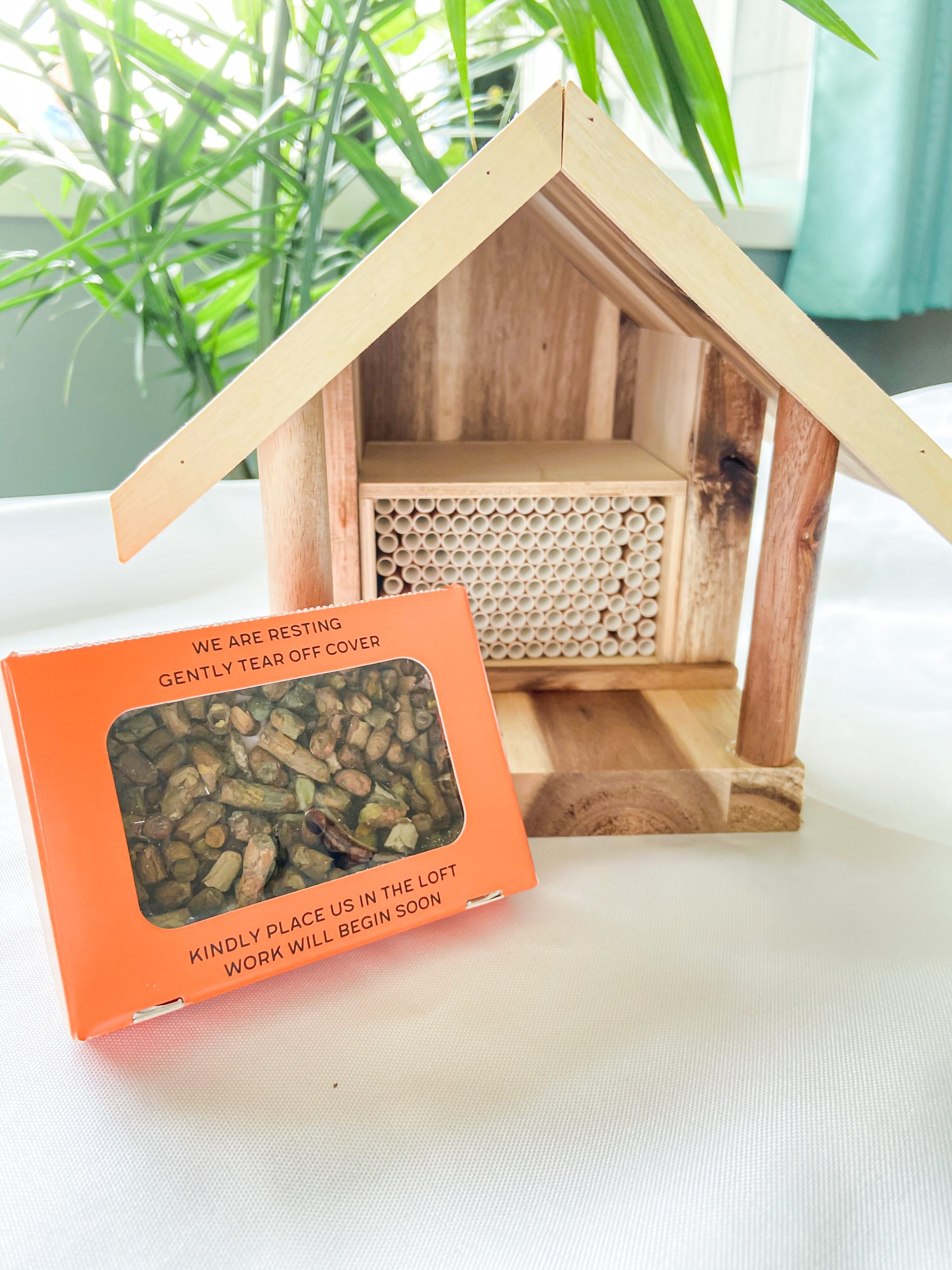
In nature, leafcutter bees will find holes in trees, plant stems, and other structures to build their nests. At Kind Bee Farms, we provide a Bee Starter Kit that contains an acacia wood bee house and a set of paper nesting tubes so your bees don’t need to go hunting for a home.
With your own set of leaf cutter bees, you can boost the pollination in your garden and see it burst with growth within just a few weeks!
Watch Your Garden Bloom with Kind Bee Farms
Solitary bees are some of the hardest-working pollinators in nature, and they are a lot more common than you might think! If you are looking for ways to boost pollination in your garden, or you simply want to try your hand at beekeeping, a solitary variety like leafcutter bees is the perfect place to start!
Visit our Shop to learn more about our Bee Starter Kit.